|
Today the Wigmore Hall once again played host to the sultry voice of Venetian Contralto Sara Mingardo. The theme of the concert was a songbook of Ancient Italian Airs, compiled by Alessandro Parisotti, with a couple of interlopers such as an aria from Handel’s Alcina. The song book includes an air attributed to Giovanni Pergolesi, “Se tu m’ami”, which is now believed to have been composed by Parisotti himself. The song book, called Arie antiche: ad una voce per canto e pianoforte and published in 1890, was Parisotti’s major claim to fame.
Performing with Mingardo were Benjamin Bayl, harpsichord, and Richard Sweeney, theorbo. Benjamin Bayl is usually seen in the role of conductor having taken part in productions such as Il parnaso confusoat London’s South Bank Centre and a critically acclaimed Ariodante with English Touring Opera. Richard Sweeney has extensive performance experience, having played with renowned ensembles including The Kings Consort, Orchestra of the Age of Enlightenment, Academy of Ancient Music, and Les Talens Lyriques. The first composer selected by Mingardo was the Neapolitan Andrea Falconieri. Of the two song chosen it was the second, “O bellissimi capelli”, which made the greatest impression. Mingardo’s lilting, smooth voice flowed through the verses, while the intuitive accompaniment from Bayl and Sweeney ensured the light dynamic of the piece was well supported. Next was Antonio Lotti, a composer hailing from Mingardo’s native Venice, who thought to have influenced Johann Sebastian Bach and George Frederic Handel. The air chosen, “Pur dicesti, O Bocca bella”, was tenderly sung, with some beautifully light touches on the arpeggios. Two more Venetians followed on from Lotti. “Sebben crudele”, by Antonio Caldara, is a famous piece, sung by most singers of all fach at one point in their careers. It was performed with dramatic flair by Mingardo, whose ardent, lyrical presentation, and intelligent ornamentation, communicated perfectly the emotion of the piece. Vivaldi’s “Un certo non so che” was next, and it was here that Mingardo moved to a more “operatic” execution. The melancholic “Quella fiamma che m’accende”, by Benedetto Marcello, provided the first opportunity for Mingardo to show off her rich, powerful lower register. The dives into the chest voice were both fierce yet controlled, with Mingardo in complete control of her instrument. The disputed “Se tu m’ami” was as emotive, yet it was more intimate, almost conversational in its delivery. Mingardo and Bayl then left the stage, leaving Richard Sweeney to perform Alessandro Piccinini’s beautiful Toccata IV for theorbo. Sweeney’s playing bought out the lilting nature of the piece, and it reminded me of being on a long train journey, through the countryside, watching the landscape out of the window. Mingardo and Bayl returned to finish the concert with four contrasting songs. The first, “Intorno all’idol mio” by Antonio Cesti, saw Mingardo’s warm, rich tone project powerfully through the hall. After this came Handel’s “Ah, mio cor, schernito sei” from the opera Alcina, which was the highlight of the concert. The dark, passionate phrases were beautifully handed, and there was a lovely resonance in Mingardo’s lower register. Another opera aria, “Se il ciel mi divide” from Niccolò Piccinni’s Alessandro nell'Indie, was the penultimate offering from the trio, with Mingardo at her most aggressive, modulating the dynamic spectacularly in the syncopated sections. The last piece was “Nel cor più non mi sento” by Giovanni Paisiello. Mingardo managed to make the wistful, dreamy music engaging, imparting the nostalgic remembrances of an older person remembering the fires of youth. The encore was the delightful “'Si dolce e'l tormento” by Claudio Monteverdi. It was an excellent way to end the concert, with each of the trio bringing an educated understanding to this frequently performed song. The last verse was so tender, that one was left with a lightness of being which lasted past the end of the fading chords. It was a delightful concert and another elegant triumph for Mingardo.
0 Comments
Your comment will be posted after it is approved.
Leave a Reply. |
Categories
All
Archives
September 2014
|
 RSS Feed
MOST VIEWED POSTS
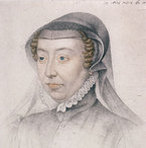
The "Maggot from Italy's Tomb?" The "Black Widow" of St Bartholomew? Or one of the finest examples of power politics and survival ever seen? Well, I would have to say yes to all of the above, and more! Catherine was one of the most complex characters in a time of massive internal strife in France, with enemies both within (Guise, D'Albret) and abroad (Philip II of Spain).
|
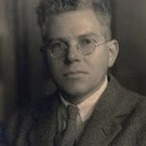
Born in Kent Town, Adelaide, Australia, Mark Oliphant was a Physicist, who received the prestigious Hughes Medal (other recipients include Alexander Graham Bell, Enrico Fermi, Stephen Hawking, and Andre Geim). He was also a life-long vegetarian after seeing a pig slaughtered at a farm as a child.
|
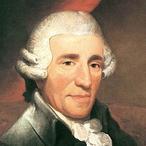
The third movement of Haydn's Cello Concerto in C Major is one of my favourite pieces of music. It is a truly joyous piece, and one which I find uplifting. The first performance I heard was by 13-year-old Han-na Chang, who took my breath away with her skill, musicianship and dynamism.
|
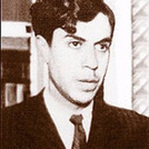
New research from Dutch scientists has revitalised the search for the elusive Majorana Fermion. The Majorana Fermion was first predicted about 75 years ago by Italian scientist Ettore Majorana, one of the Via Paspernera Boys - a group of scientists named after the street where their lab was located.
|
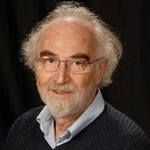
Water. Without it, we would not exist. Covering nearly 71% of the world’s surface, it is one of the key building blocks of life on Earth. We think we know all about it, how it works, and what it does. But Gerald Pollack, Professor of Bioengineering at the University of Washington, Seattle, is sure we don’t!
|
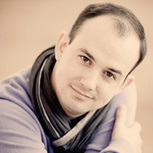
Franco Fagioli is an Argentinian Countertenor "who seems to redefine the capabilities of the countertenor voice." He has won great acclaim for his performance in the role of Arbace in the recent all-male production of Vinci's Artaserse, and will soon be releasing an album celebrating the star castrato Caffarelli.
|
© James Edward Hughes 2013