|
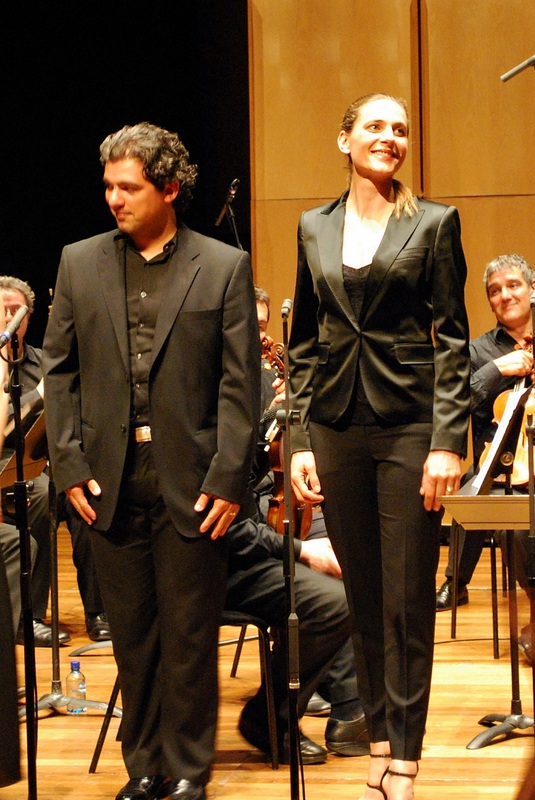
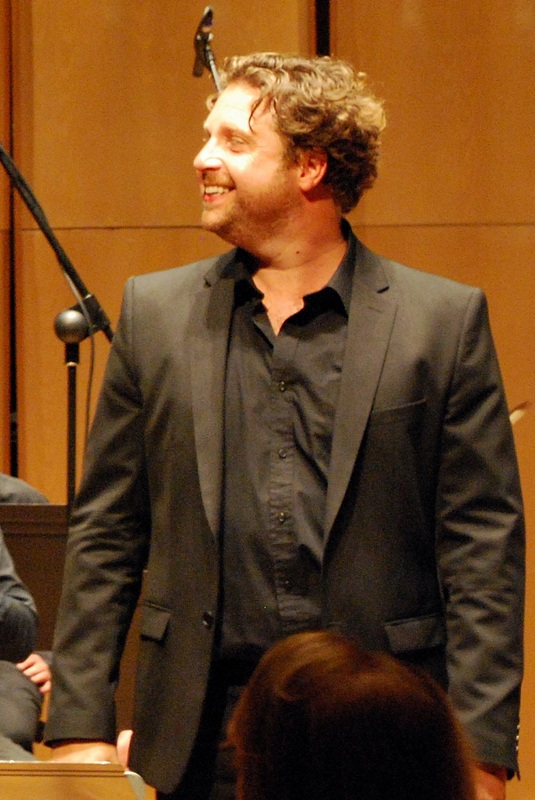
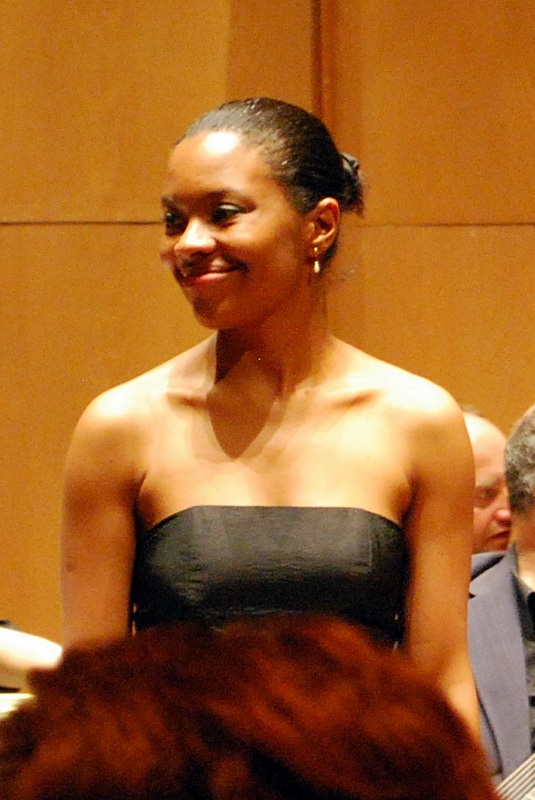
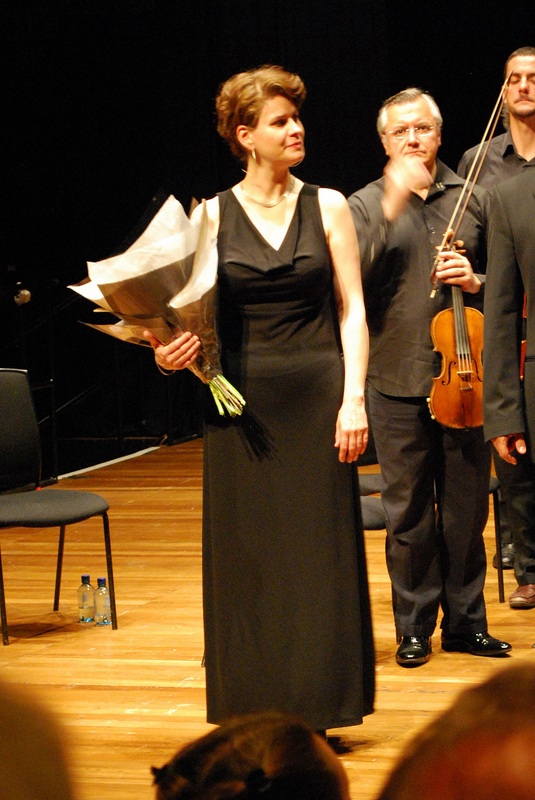
In this Olympic year, it is perhaps appropriate that we should be presented with a few performances of possibly one of the most popular librettos of all time: Pietro Metastastio’s L’Olimpiade. More than 60 baroque and classical composers used the libretto as the text for their own operatic and instrumental creations, including Antonio Vivaldi. Last night, instead of the more famous Vivaldi opera, we were presented with a "pasticcio" of the works of 16 composers: Leo, Hasse, Galuppi, Sarti, Mysliveček, Paisiello, Pérez, Vivaldi, Gassmann, Caldara, Traetta, Jommelli, Cherubini, Pergolesi, Piccinni, Jommelli and Cimarosa. The pasticcio is the brainchild of Joseph Fifer, manager of the Venice Baroque Orchestra (VBO) – the players at last night’s performance. In 2001, the VBO performed the modern day premiere of Cimarosa’s L’Olimpiade, followed in 2006 by the premiere of Galuppi’s version. It was “during research for the Galuppi staging,” Fifer says, that he became “aware that dozens of composers had set the same story.” This led to discussions between Fifer and director of the VBO, Andrea Marcon, “about creating a pasticcio performance and recording project.” After searching the archives of Milan, Florence, Naples, Venice, Paris, Lisbon, Berlin, New York, and Washington DC, and online music resources, the final tapestry of arias by 16 composers was woven together. The result was a CD, released on the Naïve recording label (also responsible for the groundbreaking Vivaldi Edition project), and a series of concerts in Europe, starting in London. A preview of some of the arias on the recording can be seen in the video below. The role of Megacle was taken by mezzo-soprano Romina Basso. We were treated to Basso’s excellent coloratura work in the first aria, Hasse’s “Superbo di me stesso.” Particularly nice was her dark tone on the low, descending phrase “come mi sta nel cor,” and her truly Olympian ornamentation in the da capo. The orchestra was a little loud, however, and slightly obscured her chest register in this aria. Not so in the fiery second act aria “L’amico dov’è?” by Cherubini, which Basso stormed through with passion, excellent diction and consummate phrasing. Her inspired modulation of the dynamics wound up the tension, earning her an extended applause. Her final aria, “Lo seguitai felice,” was a Basso tour-de-force, with exciting coloratura, fluid movement throughout the range, and breathtaking beauty of tone. Two of the three arias for contralto Delphine Galou – taking the role of Licida – were composed by Baldassare Galuppi. His version of the opera premiered in Milan, and was regarded as his most successful opera seria. The first aria, “Quel destrier, che all’albergo è vicino,” showed off Galou’s rich, velvety timbre sound, while in her last aria, “Gemo in un punto, e fremo,” her forceful delivery and intuitive delivery of the text was striking: and what a strong low Ab at the end of the B section! The most astounding performance, however, was her beautifully tender, stripped-down version of Vivaldi’s “Mentre dormi” – a haunting and definitive rendition. I look forward to hearing her interpretation of the role of Bradamante in Handel’s Alcina at Versailles next month. 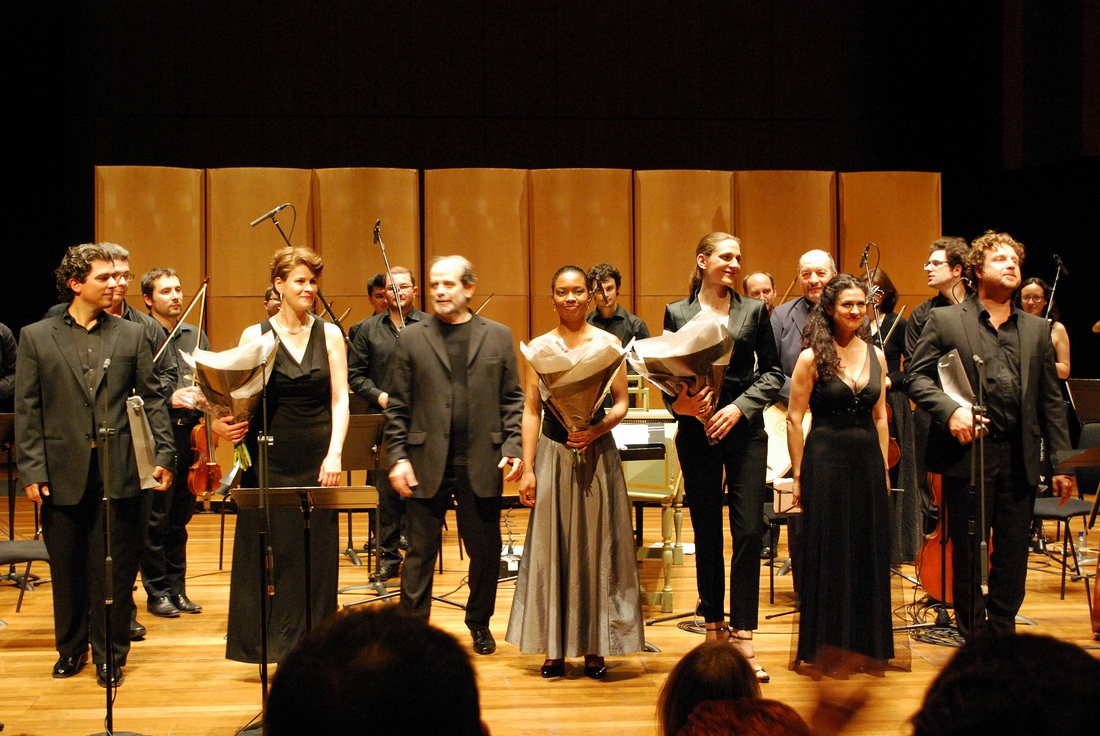 I was looking forward to hearing the aria by Josef Mysliveček “Del destin non vi lagnate,” performed be tenor Jeremy Ovenden. What I was not prepared for, however, was the ringing F#4 (G in Baroque pitch) at the start of the piece. In fact, I would say that Ovenden was the surprise of the evening. His pianissimo notes in the head register on the phrase “ma regnate”were delightful, and his phrasing and tone throughout the aria marked him as a rising star. Well done to him also for continuing un-phased as part of the ceiling fell down! He handled the difficult “So ch’è fanciullo Amore” by Jommelli expertly, and excelled in the final aria of the opera, “Non so donde viene” by Cimarosa, with its nearly two octave ascending leap. Luanda Siqueira took on the role of Argene, originally performed by Karina Gauvin on the Naïve recording. She was composed throughout, and performed well, particularly in Pergolesi’s fiendish “No, la speranza,” displaying a solid and flexible range over two octaves. "Oh care selve, oh cara" by Sarti had some beautifully lyric moments, with Siqueria providing some very tasteful ornamentation. Her coloratura during Traetta's "Che non mi disse un dì!" was precice, though it was freer and more playful in her final aria, Perez's "Fiamma ignota nell’alma mi scende." 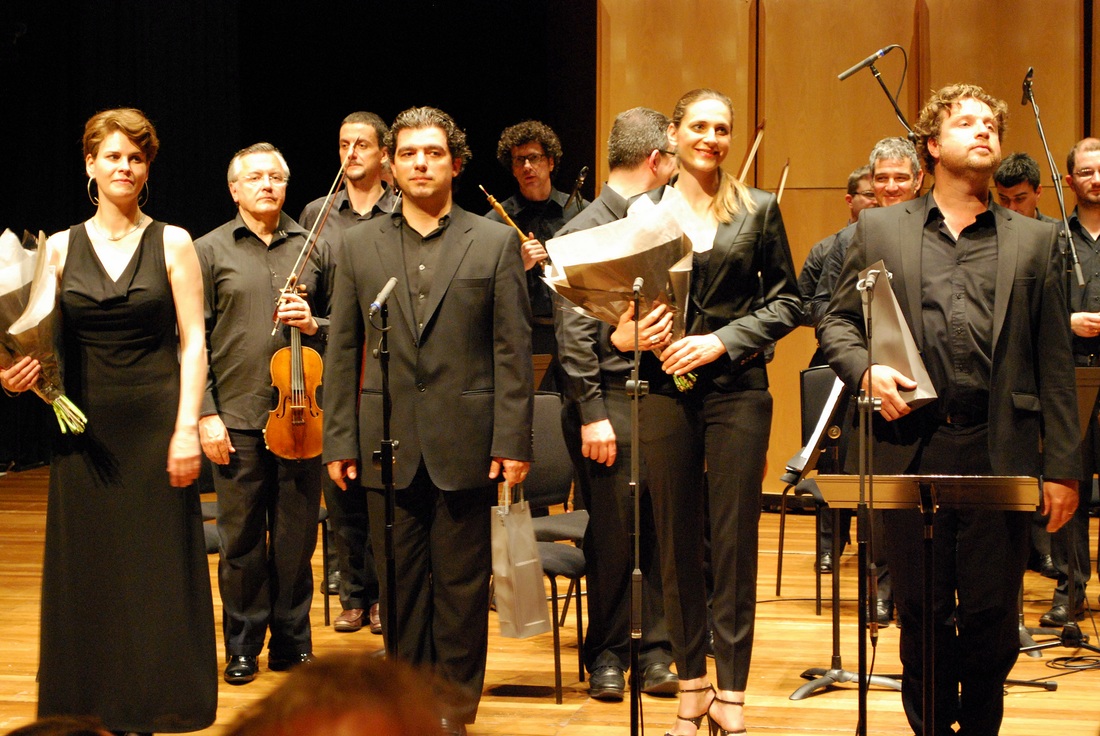 The love interest of both Licida and Megacle, the Princess Aristea, was sung by Ruth Rosique, who threw herself into her character with determination, reaping exciting results, particularly in the fierce offering from Leonardo Leo, “Tu me da me divide”. Her duet with Romina Basso, “Nei giorni tuoi felici,” was convincing, with Rosique and Basso interacting well. Caldara's "Grandi, e ver, son le tue pene" is vocally taxing, but Rosique managed to make it her own. Paisello's "Tu di saper procura" and Piccinni's "Caro, son tua cosi" allowed Rosique to showcase the softer side of her voice to great effect. The role of Aminta was taken by counter-tenor Nicholas Spanos, who also doubled up as a bass in the choruses: the final two of which, both by Hasse, were superb. Bassoonist Stefano Meloni deserves special mention for his virtuosic playing during Spanos' first aria, “Siam navi all’onde algenti,” which was a furious tempest of an aria. Markellos Chryssicos at the Harpsichord was also worthy of note. Chryssicos had previously taken the role of conductor on the CD recording. It was an enjoyable evening, particularly for those wishing to look deeper into the world of those Baroque composers. Indeed, Joseph Fifer stated objectives were: “to help introduce important work by several lesser-known composers, and to encourage others to continue exploring the enormous body of eighteenth-century Italian opera.” This production shows that these objectives have been met, admirably.
0 Comments
 Juan Diego Flόrez’s fifth Rosenblatt Recital took place at the prestigious Royal Albert Hall. His program included mainstream Tenor set pieces, such as “Dein ist mein ganzes Herz,” “Be My Love,” and “De' miei bollenti spiriti,” as well as a series of lesser known bel canto and 20th Century Spanish material. The first two offerings came from Bellini’s Il Pirata. The Württembergisches Kammerorchester Heilbronn, under the baton of Alessandro Vitiello, set the tenor of the evening with their energetic rendition of the Overture of the opera. Flόrez then came to the stage, greeted with rapturous applause, and regaled us with “Nel furor delle tempeste.” His clear, diamond voice launched into the aria, which called for 7 A4’s, a B4 and a D5! All this in the first aria! When approaching the D5, Flόrez had that perfect alignment of body and voice which is essential when a Tenor rises above the High C’s! His phrasing on the line “io l’amo, e peno” was particularly beautiful. To follow Bellini, we were served Rossini! The orchestra powered through the Overture to La Scala di Seta. Special praise must go to the double basses for their expert playing of the more thunderous parts of the piece. From the same opera, Flόrez gave us “Vedrò qual sommo incanto.” The warmth of the first verse was followed by the virtuosity of the second, where Flόrez had a magnificent coloratura run, starting at Bb4 and returning right back again, and a C5 as ornamentation, both of which were handled masterfully. Verdi was also on the menu, with the Sinfonia from Luisa Miller showing off the talents of the fabulous clarinettist, and Flόrez on top form with “De' miei bollenti spiriti” from La Traviata. 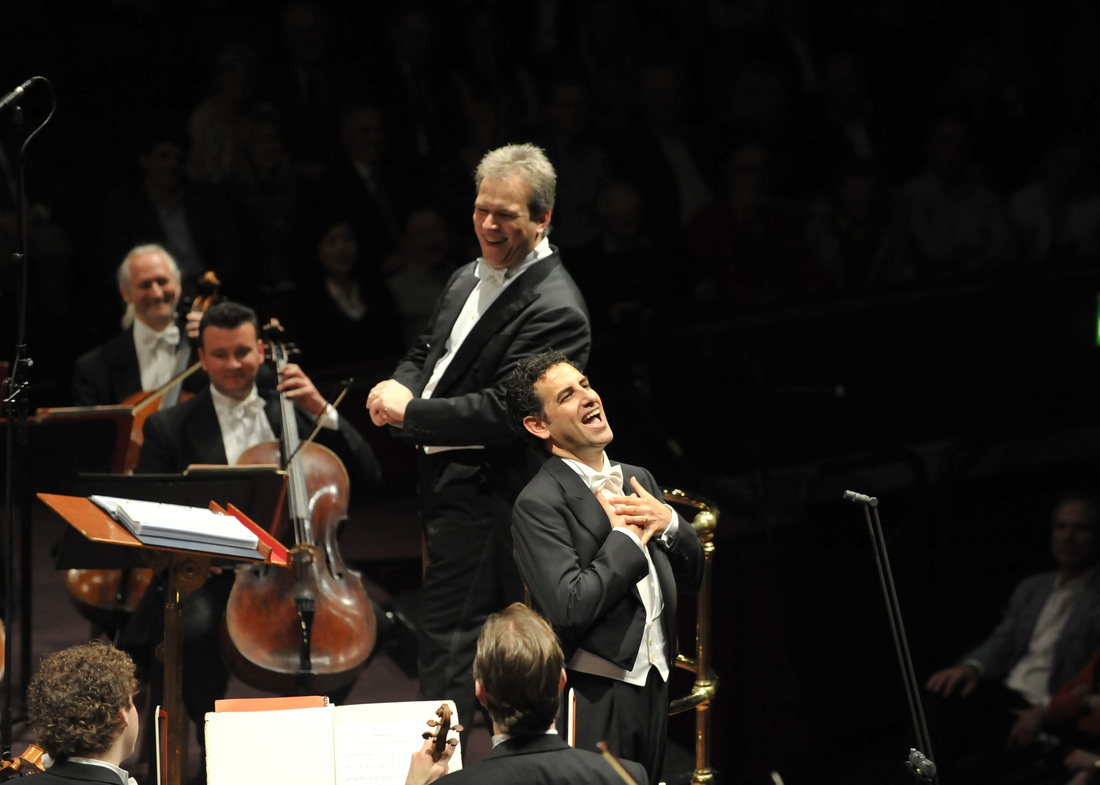
After the interval we were treated to three Spanish composers. The first was from his Amadeo Vives’ zarzuela, Doña Francisquita: the famous second act aria "Por el humo se sabe." Flόrez’s dramatic, desperate outburst on the phrase “Se me entra por los ojos y a veces sueño que ya la adoro” with its alternating Ab4/G4 scoring, was very powerful. The second piece was a playful ditty called “El mismo rey del moro” from José Serrano’s La algería del batallόn. Finally we heard the Intermezzofrom Gerόnima Giménez’s La boda de Luis Alonso. The vitality with which the orchestra executed the piece was palpable, with committed, aggressive violins, and a sensational performance by the brass section. With Lehár’s “Dein is mein ganzes Herz” and Brodzsky’s “Be My Love” Flόrez reminded us why the tenor voice has such beautiful melodies composed for it. The emotional delivery of the Lehár was infectious, and much credit should be given to the orchestra for judging correctly the level of sentimentality required. His delivery of “Be My Love” brought a tear to the eyes of a few of the audience members sitting around me. A few people around me were singing it to themselves as we waited for the final aria on the program. Flόrez introduced the next piece, “Allegro io son” from Donizetti’s Rita, telling us that it was about a man who had lost his wife. Though it was no great loss as he didn’t want her anyway! There were several octave leaps up to B4, plus an octave jump up to C5. The high notes were effortless, amazingly so given the arias he had performed thus far. Flόrez’s humour shone through as he sang his “Tra la la la la”lines. It earned him whistles from the arena. A wave of foot-stomping went through the crowd as we waited to see what encores we would be getting. Flόrez’s signature piece, “Ah, mes amis” from La fille du regiment was the first encore. The nine C5’s penetrating the Hall like a laser, on pitch and cutting straight through the orchestra. Next up, we had “La donna è mobile,” from Rigoletto. Flόrez's tempo slower than usual, showing off his astounding breath control and beautiful legato singing. He crowned the aria with a magnificent C5. The last piece,Granada, was a perfect ending. Flόrez created a wonderful texture to the phrases, and the Morish triplets at the end sent shivers down my spine. The concert was an overwhelming success for Flόrez, and for Ian Rosenblatt’s Recital Series. 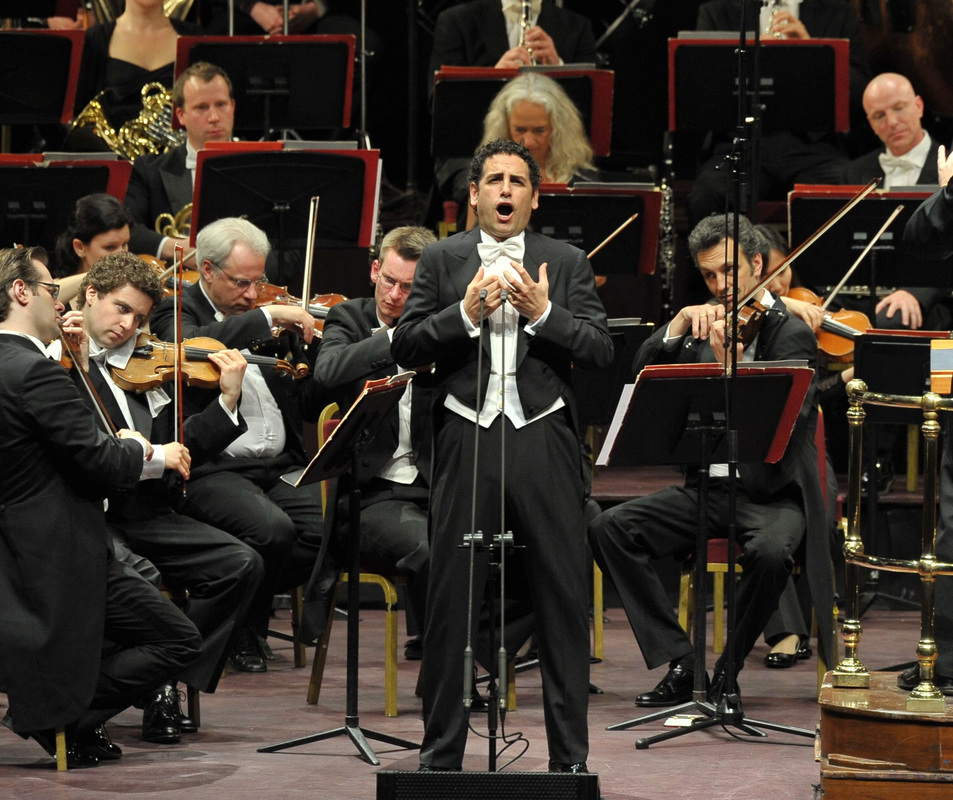
Reader Feature: Huw Smith reviews "The Importance of Being Earnest" by Gerald Barry at the Barbican5/7/2012 Huw Smith, a regular reader of Show Me Something Interesting, went to see Gerald Barry's new opera, The Importance of Being Earnest, at the Barbican, and kindly penned a review for the blog. So, without further ado, here are his musings. The Importance of Being Ernest - the opera by Gerald Barry Of all the plays to choose! How do you make the dialogue count, convey the verbal sparring, and retain the sparkling wit…how? You DON’T! This isn’t entirely true, but Barry shreds, and I mean shreds the text. How much is discarded…two thirds? Well that’s pretty standard for an adaptation and no bad thing if you’re writing an opera. And in the end isn’t it the music that counts? Isn’t it? The text is ravaged, cut to pieces, and reduced to its brutal essentials. Barry puts the wild in Wilde or perhaps reveals the wild in Wilde and his well made play, that is if you could decipher the sung text. Yes, there were surtitles but having arrived at the hall without the correct glasses, I gave up attempting to read them and concluded it was far more fun without them. The words were there - (sung very fast, very slow, words dissected, phrases sung across the natural rhythms) - but once you surrendered to the sound and simply accepted what little meaning you could catch, you relaxed, sighed, and enjoyed the ride (and when was the last time you could say that of a contemporary opera?). Fun? Did I say ‘fun’? A contemporary opera that’s ‘fun’? Well yes astounding though it may seem, it’s an absolute hoot both funny and exhilarating and without conceit though somehow lavished with it. So, what is it that makes Barry’s Importance… something to be revisited? Well for a start its sheer energy and exuberance and scatter-gun approach – there’s little time to grow bored with one thing as along comes the next and the next. Did I say scatter-gun? 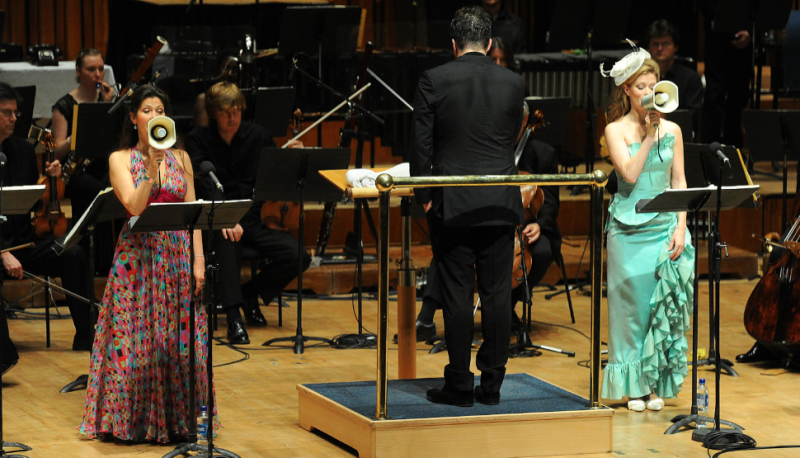
A highlight was the verbal exchange between Gwendolen and Cecily; an exchange conducted by megaphones, which intensified via scoring for how many smashed dinner plates?(48?), (in strict time), to scoring for jackboots and duel by pistols. Perhaps you had to be there. I leant forward in my seat. I rarely lean forward and only when the entertainment reaches out and sucks me in. I was sucked in and totally, completely, irrevocably, won over by Mr. Barry. I must admit that I’d admired his Bitter Tears of Petra Von Kant, but this, this was altogether a far more even-flavoured soup; and nothing less than an avant-garde-ist soup at that of ‘twenties London, Paris, Berlin and Moscow …and probably of Buenos Aires too thrown in for good measure. Barry mentions the fake surrealism he uses at the start but frankly it’s a kitchen sink assemblage of every musical "ism"of the twentieth-century you’ve ever heard and probably some you haven’t with a little G. & S. pattering for good measure. I loved it. Special mention to Thomas Ades who’s conducting was a masterclass in controlled intensity; it kept drawing me from the rest of the performance but then there were so many things to savour – the opera needs to be experienced more than once. The different parts of the Birmingham Contemporary Music Group (three cheers for smaller orchestras) also seemed to revel in having something challenging to work with as did the singers who were to a man equally committed and I believe won over by the writing, fiendish though it must have been at times. In particular Peter Tantsits’ barely contained punk-ish mania and the stratospheric zapping by Barbara Hannigan. Barry’s subversive cross-cutting decimation of the text became an added orchestral textural flourish - can I be championing this mashing syncopation? Oh yes I can. Barry’s Importance… simply uses Wilde’s sublime Importance… to create a reassuringly old fashioned musical revolution of an entertainment. There was nothing new here but how refreshing the result. I left with a smile on my face and not the fixed one I expected to be wearing as I exited the Barbican Hall. Too late now to hear it in the concert hall. See if you can catch it on iPlayer, Radio 3, and write to ENO demanding that it be given a run sooner rather than later. So, that was Huw's take on the opera. Take a look at the Barbican brochure, and have a listen to Stephen Fry, Fiona Shaw, Thomas Adès and Gerald Barry discussing the work in the video below (thank you to the Barbican for uploading it!) if his review has sparked your interest. |
Categories
All
Archives
September 2014
|
 RSS Feed
MOST VIEWED POSTS

The "Maggot from Italy's Tomb?" The "Black Widow" of St Bartholomew? Or one of the finest examples of power politics and survival ever seen? Well, I would have to say yes to all of the above, and more! Catherine was one of the most complex characters in a time of massive internal strife in France, with enemies both within (Guise, D'Albret) and abroad (Philip II of Spain).
|
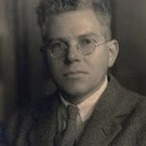
Born in Kent Town, Adelaide, Australia, Mark Oliphant was a Physicist, who received the prestigious Hughes Medal (other recipients include Alexander Graham Bell, Enrico Fermi, Stephen Hawking, and Andre Geim). He was also a life-long vegetarian after seeing a pig slaughtered at a farm as a child.
|
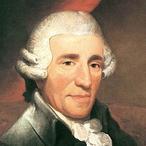
The third movement of Haydn's Cello Concerto in C Major is one of my favourite pieces of music. It is a truly joyous piece, and one which I find uplifting. The first performance I heard was by 13-year-old Han-na Chang, who took my breath away with her skill, musicianship and dynamism.
|
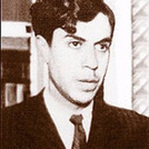
New research from Dutch scientists has revitalised the search for the elusive Majorana Fermion. The Majorana Fermion was first predicted about 75 years ago by Italian scientist Ettore Majorana, one of the Via Paspernera Boys - a group of scientists named after the street where their lab was located.
|
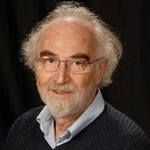
Water. Without it, we would not exist. Covering nearly 71% of the world’s surface, it is one of the key building blocks of life on Earth. We think we know all about it, how it works, and what it does. But Gerald Pollack, Professor of Bioengineering at the University of Washington, Seattle, is sure we don’t!
|
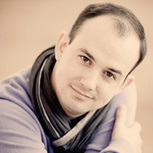
Franco Fagioli is an Argentinian Countertenor "who seems to redefine the capabilities of the countertenor voice." He has won great acclaim for his performance in the role of Arbace in the recent all-male production of Vinci's Artaserse, and will soon be releasing an album celebrating the star castrato Caffarelli.
|
© James Edward Hughes 2013