Medical Historian Dr Lindsey Fitzharris’ interest in history began as a child, rummaging through the basement in her grandmother’s house, where she would find “ amazing objects…that really made the past come alive.” It was also her grandmother who would bring her into contact with the dead people that would become such a large part of her life: “ I used to make my grandmother take me to old cemeteries in Chicago when I was younger. I suppose you could say I have always been fascinated with death.” It was while studying for her Doctorate at Oxford University, however, that her interest in the macabre area of medical specimens, deformities and public dissection was born. As part of her desire to make medical history and medical artefacts accessible to a broad audience, Lindsey Fitzharris created the idea of a documentary focusing on the horrors of pre-anaesthetic medicine, exploring subjects such as Anatomists, Anthropedic Bibliopegy (Binding books in Human Skin), Body Snatchers, Executions, Pioneers of modern surgery, eclectic collections of medical specimens and stories of the exploitation of the medically deformed. “ Each victim had a story,” according to Fitzharris, “ and up until now, only academics have access to them.” This documentary is to be called Medicine’s Dark Secrets. Take a look at the trailers below. Also, check out the great event below (tickets still available at the time of writing) to be held on 21st May, at 19:00 at Black's Club, Soho, London. Ticket fees will go towards funding the film. Lindsey Fitzharris and many of the people working on the project are waiving their fees to produce Medicine's Dark Secrets. Further information about Lindsey and her projetcts, past and future, can be found in the links below:
Hello everybody. The new look Contralto Corner, with more Contraltos, more info, and more arias, is now up and running. Please click in the picture above, or go to www.contraltocorner.com to find out more. The link in the tool bar below the site title will now redirect to the new site. Enjoy! There is also a Facebook Page and a Twitter Account - please follow both.
The hall of the Warsaw National Opera House was packed out with people from all over Europe coming to hear the great Polish contralto Ewa Podleś perform a series of arias which showcased the wide-ranging scope of her repertoire. Accompanying her was conductor Michael Güttler, and the Teatru Wielkiego choir and orchestra.
To start the evening, we were treated to a lively performance of the Arrival of the Queen of Sheba, from Handel’s Solomon. The orchestra was in good form, and particular praise must go to the oboe soloists who did a spectacular job. Madame Podleś arrived onstage to a thunderous applause, dressed in a glamorous black trouser suit with sequins. Her first aria was “Dover, giustizia, amor” from Ariodante, which she took slightly slower than usual, but nevertheless dominated it in true Podleś style. The end of the aria saw her rise to a ringing A5, only to thunder down to a chesty D4 to finish.
We were treated to three pieces of Rossini during the program, two overtures and an aria/scena. The first overture was from William Tell, in which the cello soloists and the section in general were magnificent, playing with intensity and feeling. The ebullient overture from Il Signor Bruschino was the second orchestral offering from Rossini. Güttler’s conducting was full of zany energy, and the second violins very much enjoyed their bow-tapping on the stands. (The score of the bow tapping can be seen in the picture below).
Ewa Podleś gave a highly dramatic and aggressive performance of “Ciro infelice” from Rossini’s Ciro in Babilonia. Pitch-perfect notes at the top of the voice were thrown out like javelins at the audience, while the true contralto chest register was unleashed on more than one occasion, with the slow descent to E3 a stunning example of the cavernous force of the lower end of the female voice. Podleś ended the aria with a truly primal D4, high in the chest register, which lasted right until the end of the orchestral accompaniment. It was a truly devastating piece of singing, which earned a huge round of applause from the audience.
Podleś again impressed with “Il sergreto per esser felici” from Donizetti’s Lucrezia Borgia. Her perfect legato singing was matched with a very rich sound in the middle register. Her F5’s and G5’s were spot-on, and Podleś seemed to enjoy moving through the upper register in this aria. During the repetition of the phrase “si dan del futuro pensier” she once again plumbed the contralto profundo depths, hitting an E3 of such force and resonance that a couple of tenors in the choir were rather taken aback!
Returning to the stage, Podleś had changed into a wonderful orange dress with black lace embroidery to sing “Field of Death” from Prokofiev’s cantata Alexander Nevsky. The mesmerising timbre of the Podleś middle register was perfect for this piece, and the great contralto was forced to come back onstage at the end, such was the level of applause she received. Another emotionally charged aria was “Voce di donna o d’angelo” from Ponchielli’s La Gioconda. Here Podleś was full of high drama, fiercely emotional and physically compelling. Again the audience erupted with applause.
The concert program concluded with a selection of music from two Verdi operas. The first piece was the overture to La forza del destino, the main motif of which was beautifully played by the wind section. The spectacular Anvil Chorus from Il Trovatore gave the bass and contralto sections of the choir a chance to shine, as the main part of the chorus is written in unison high in the voice. The wall of sound from the right of the choir was startling to behold. Finally, Madame Podleś returned to the stage as Azucena singing the menacing “ Stride la Vampa” also from Il Trovatore. The Polish contralto’s acting ability came to the fore here, as she was totally in character from the moment she took position next to Güttler. Her high notes were extraordinarily resonant, a testament to her excellent technique. We were treated to two encores. The first was a scene from Massenet’s Cendrillon, where Podleś takes on the character role of Madame de la Haltière, a role she performed at the Royal Opera House. Her comic timing was perfect, and her gestures and expressions intelligently executed. The final encore was “ Cruda Sorte” from Rossini’s L'italiana in Algeri. Podleś alternated magnificently between the light head register for the coloratura passages, and the dark chest register used for the chromatic descent on the phrase “ tutti la bramano”. She ended the concert in true Podleś style with a formidable F5 which rang out spectacularly. It was an amazing concert, and I’m very glad I went to Warsaw to see her.
Hello everybody! I hope the New Year is being kind to you all.
Jean Wakefield, a veteran contributor to the Contralto Corner, has suggested four more contraltos for us all to listen to. Many thanks Jean for your continued interest and support!
The first in the list is Sigrid Onegin, a Franco-Germanic contralto born in Sweden. She lived from 1889 to 1943, singing at the Met, Covent Garden and Bayreuth, in roles such as Orfeo, Eboli, Erda and Amneris. She also created the role of Dyrad in Richard Strauss' Ariadne auf Naxos. She sings Eboli's "O Don Fatale" from Verdi's Don Carlo in the video below.
The next contralto is the great Armenian Lili Chookisian, the key contralto at the Met in the 60's, 70's and early 80's. She died in April last year, but her great performances have stayed with us. Like Ewa Podles, she was capable of both cavernous chest tone and a ringing C6. In the video below, she sings the fearsome aria "Re Dell'Abisso" from Verdi's Un Ballo in Maschera. The Welsh contralto Hillary Summers is another dramatic contralto, like Chookasian and Podles, with a fierce chest register. Her she performs "Peccator Videbit"from Vivaldi's Beatus vir, the version for the Ospedale della Pietà, RV 795, which he wrote for a very low-voiced female singer. Summers handles the F3 and E3 with ease.
Swiss contralto Ursula Ferri is another "assoluta" contralto with a very wide range. In a previous post, we heard her hit a C3, and in this clip, Gaea's scene from Richard Strauss' Daphne, she sings a plethora of Eb3's on stage. Go Ursula!
 Marijana Mijanovic, contralto In 1771, aged just 15, Mozart wrote what was to be his only Oratorio, Betulia Liberata. It was commissioned by Giuseppe Ximenes, Prince of Aragon, while Mozart was in Padua, though it was not performed during the composers' lifetime. The role of Giuditta, widow of Manasseh, was written for the alto voice, and in this performance the Serbian contralto, Marijana Mijanovic, takes on the role. The tessitura is perfectly set for the contralto voice, with low passages which cry out for the dark, smoky timbre of the contralto chest register. If you want to follow the score, you can see it at the IMSLP website. I hope you enjoy the wonderful videos uploaded by the YouTube user ssiroe. The first aria is "Del pari infeconda" which has a range of G3 to D5. Listen to the wonderful strength of Mijanovic's low tones. The second aria is "Parto inerme, e non pavento" which has a range of A3 to D5, and containing some typical Mozartian intervals.
The final aria penned for the role of Giuditta was "Prigionier che fa ritorno" which has a range of A3 to C#5.
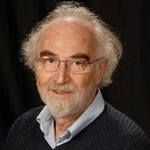
Water. Without it, we would not exist. Covering nearly 71% of the world’s surface, it is one of the key building blocks of life on Earth. We think we know all about it, how it works, and what it does. But Gerald Pollack, Professor of Bioengineering at the University of Washington, Seattle, is sure we don’t!  Prof. Gerald Pollack Ice, water and vapour: the three phases of water. Sounds simple, doesn’t it? Not so, according to Gerald Pollack. Research conducted by Pollack and his associates has found evidence for a fourth phase of water which could have far reaching effects for our current understanding of the substance, its role in biological systems, and its application in technologies including energy, desalination and filtration. This fourth phase, the “Liquid Crystalline” phase, is the result of an, as yet, undetected extension of multiple layers of structured water molecules which occur at hydrophilic (water loving) surfaces, and at the air/water interface.
So, what is Liquid Crystalline water, and how and when is it formed? Well, Liquid Crystalline water differs from bulk water in that: it has retained a systematic ordering of molecules which causes an Exclusion Zone from which various substances are displaced. It also has a significant negative charge, and can form semi-solid structures which can carry normal bulk-water. It is more fluid than the rigid structure found in ice, but the strong attraction between the electropositive Hydrogen atoms and the electronegative Oxygen atoms causes a weaker, more fluid chain of molecules to form, the length of which can be surprisingly large.
The extent of the Exclusion Zone was discovered during an experiment in which a suspension of latex microspheres (i.e. an aqueous solution of microspheres large enough to eventually produce sedimentation) was poured onto a Polyvinyl alcohol gel (a hydrophilic substance). The prevailing scientific paradigm states that a small number of layers of order would occur at the gel/suspension interface: perhaps about two or three [i]. What Pollack observed, however, was “a few million layers” [ii] of ordered water. Further experiments produced an Exclusion Zone visible to the naked eye. The proof for this came from the observation that the "microspheres were distributed nonuniformly" and "were almost completely excluded from the region near the gel surface. Far from the surface” [iii] leaving a crystalline-like area, where no microspheres were detected. The Liquid Crystalline water has a significant negative charge to it [iv], with a noted abundance of positive charge in the adjacent area of bulk water. While dipole molecules such as water have electropositive and electronegative areas, they don’t have an overall negative charge. When the Exclusion Zone (EZ) was analysed spectroscopically, it was found to absorb light at 270 nanometres “which is typical of electrons set up in a ring structure (n electrons)” [v] such as can be found in Benzene, Pyridine and Phenol.
Unlike ice, which has a rigid structure, the hexagonal layers found in Liquid Crystalline water are far more densely packed. This can occur as the protons which “glue” the layers together in ice are expelled from the Liquid Crystal into the bulk water, forming an area of positive charge just outside the Exclusion Zone. In fact, an increase of pH (i.e. making the water more alkaline) within certain parameters has been shown to “greatly enhance the rate of Exclusion Zone formation.” The resulting distinct areas of negatively charged EZ water, and positively charged bulk water, are a potential source of energy: in effect, a water battery! As Pollack says on his website: “The scientific underpinning of this separation is extremely interesting, and is revealing as much about the structure, chemistry, and physics of water as about the prospects of obtaining clean electrical energy from water.” [vi]
Where does the energy come from to induce this ordering? The simple answer is: light! Energy coming from UV, visible and Infra Red wavelengths all produce significant molecular ordering, with the greatest amount coming from the Infra Red spectrum. Pollack states that “five-minute exposure to radiation at 3.1 µm (corresponding to OH stretch) causes exclusion-zone-width increase up to three times.” [vii] It is believed that photons cause the bulk water to reorganise into the more structured, crystalline form, though how this occurs is still being studied. Pollack states that “this light-induced charge separation resembles the first steps of photosynthesis” [viii] and indeed, it seems that this theory could give us a much better understanding of many biological processes.
Pollack’s work raises important questions in the realm of cell biology, particularly with respect to cell structure and the ingress and egress of ions to and from the cell. The prevailing wisdom states that “pumps transport solutes across the cell boundary against their respective concentration gradients” while “Channels permit the solutes to trickle back in the opposite direction.” [ix] Pollack questions these long-held basic features of cell function in his book, Cells, Gels and the Engines of Life (2001). He also questions the lever-arm hypothesis in muscular motion, in his book: Muscles and Molecules: Uncovering the Principles of Biological Motion (1990). In both instances, Pollack introduces Liquid Crystalline Water as an alternative player in the game.
Pollack suggests that the EZ layer of structured water has a key role in the following two examples. The first is the “Floating Water Bridge” [x]. The floating water bridge is a “stiff, cylindrical tube, with an annulus and core structure” [xi] which occurs when a large potential difference is applied between two beakers of pure water. It exhibits a “simultaneous bi-directional flow of water and charge” [xii], the positive charge flowing through the rotating outer annulus, while the negative charge flows through the core. When the beakers are separated, up to a distance of about 25mm, a cylindrical tube is formed, seemingly impervious to gravitational forces, which transports fluid and charge between the beakers, resulting, after time, in one beaker of high pH, and one of low pH. Fuchs et al. Found that when “the voltage is shut off instantaneously, the surface tension turns the bridge into a series of falling droplets.” [xiii] The second example occurs at the air/water interface: the "Tent Phenomenon." The tent phenomenon occurs "when a capillary tube is touched to the surface of the water above a microsphere-free region." [xiv] The layers of water in the microsphere-free region are pulled upwards, in a tent-like shape. However, Pollack goes on to say that: "thousands to millions of water layers beneath the capillary tube, the microspheres are pulled up in exactly the same shape." [xv] The fact that this occurs suggests that "there could be vertical structuring within the microsphere-free region [which] could provide evidence that the water at the air-water interface is more extensively structured than in bulk." [xvi] The experiment also noted that as "the capillary tube is moved up and down or across the surface of the water, the microsphere “tent” beneath it moves in the same way." [xvii] Images showing the action of a capillary tube inducing the "Tent Phenomenon" There are many applications for Pollack’s theories. Three major new technologies being looked into now are: filterless filtration, bases on the property of EZ water to “ repel impurities” such as arsenic [xviii] and bacteria, ”leaving a layer of pure water" [xix]; desalination [xx]; and the extraction of energy from a “ liquid water battery” [xxi]. More esoterically, Liquid Crystalline water could also have implications for such phenomena as “the laying on of hands” in spiritual healing and of “earthing ” [xxii]. Finally, with Liquid Crystalline water in the frame as one of the key components of Photosynthesis, Pollack’s work could lead us closer to an understanding of the origins of life [xxiii]. You can keep up to date with Pollack’s work at the Pollack Laboratory website. He will also be bringing out a new book towards the end of 2012 called “ The Fourth Phase of Water: Beyond Solid, Liquid, and Vapor” a preview of which you can see on the Pollack Laboratory website. [i] This is due to the current belief that, as the layers move outward from the interface, they start to vibrate. This vibration, induced by thermal motion, was believed to be the cause of the finite extent of the structured layers water molecules. [ii] Transcript of A Special Interview with Gerald Pollack about Structured Water. Dr Mercola and Prof. Pollack. Mercola.com. 29 Jan 2011 [iii] Ibid. [iv] Surfaces and interfacial water: evidence that hydrophilic surfaces have long-range impact. Zheng JM, Chin WC, Khijniak E, Khijniak E Jr, Pollack GH.Sci. 2006; 127: 19-27. [v] A Fourth Phase of Water starts to Gel. University of Western Ontario website. [vi] Pollack Laboratory Website. Research themes. Water-Based Technology. [vii] Pollack Laboratory Website. Research themes. Water Science. [viii] Ibid. [ix] Cells, Gels and the Engines of Life: A New, Unifying Approach to Cell Function. Gerald H. Pollack. 31/05/2001. pp 4. [x] The floating water bridge was first reported by British Engineer William Armstrong in a public lecture in 1893. It was then subsequently forgotten about for a century. It was he who discovered the charges in the annulus and the core. He was also an advocate of solar power and renewable energy. [xi] Plasma Behavior in the Floating Water Bridge & Biology. Robert Johnson. Electric Universe 2012 Conference: The Human Story. [xii] Ibid. [xiii] The Floating Water Bridge. J. Phys. D: Appl. Phys. 40 (2007) 6112-6114. Fuchs, Elmar C.; Woisetschläger, Jakob; Gatterer, Karl; Maier, Eugen; Pecnik, René; Holler, Gert and Eisenkölbl, Helmut. [xiv] New Observations at the Air-Water Interface. Journal of Undergraduate Research in Bioengineering. A. Jolene Mork, Gerald H. Pollack. [xv] Ibid. [xvi] Ibid. [xvii] Ibid. [xviii] Arsenic in well water is one of the biggest killers in Bangladesh. Pollack’s new technology could have massive implications for people in rural parts of the country. See this BBC News Report for further details of the crisis in Bangladesh. [xix] Dirt-repelling tube promises cheap, pure water. New Scientist Magazine. Jon Evans. 15 July 2008. [xx] Pollack Laboratory Website. Research Themes. Water Based Technology. [xxi] Ibid. [xxii] Transcript of A Special Interview with Gerald Pollack about Structured Water. Dr Mercola and Prof. Pollack. Mercola.com. 29 Jan 2011. [xxiii] Pollack Laboratory Website. Research Themes. Origin of Life.
Contralto Sonia Prina joined forces with the incomparable Il Pomo d’Oro for a memorable evening, combining the beauty and depth of Vivaldi with some breathtaking performances. It was a triumph for Prina, earning a rapturous applause from a packed Wigmore Hall. The first of the three Vivaldi cantatas we were treated to was “ Perfidissimo cor!” which was accompanied only by Harpsichord, Lute and Cello. This intimate grouping allowed Prina to communicate, with a potent intensity, the emotional charge of the text, weaving an enchantment which remained throughout the evening. Prina’s famous coloratura came early in the recital, as she navigated effortlessly through the demisemiquaver runs occurring repeatedly on the word “ sdegno” in the first of the two arias, which she ended with a formidably solid G3. The second aria contained many uses of elements of the harmonic minor scale, which requires pin-point accuracy of pitch to sound effective: a requirement that Prina was more than happy to deliver. The first aria of the second Vivaldi Cantata, “ Cessate, omai cessate”, opened with an interesting mix of pizzicato and bowed strings: the score stipulating that only the cello and one violin be bowed. At moments of emphasis, all the strings are designated arco, which gave an aggressive, whip-like effect to the phrase “ Già barbare e spietate”. Prina’s beautiful ornament at the end of the B section lead straight into the da capo, where she added a series of tasteful mordents, turns and trills, finishing with an ornament that deliciously portrayed Prina’s dark and velvety lower register. The second aria set the Wigmore Hall on fire, as Prina performed at impossibly high speed, throwing out F5’s like fireworks, while adding even faster ornamentation in the da capo. The roar that came from the audience proclaimed the first half a resounding success. In the second half, Prina presented us with two arias from Vivaldi’s operas. The first, “ Cosi potessi anch’io” from Orlando furioso, saw Prina don the mantle of the Sorceress Alcina, alternating between longing for her lover, and lamenting her lot at the hands of the god of love. Prina carried a beautiful legato line, with a warm and passionate tone throughout. The second aria, “ Se in ogni guardo” from Orlando finto pazzo, saw Prina rip through the music like lightning. Her precision in the difficult coloratura passages was astounding. The final piece in the second half was the cantata “ Amor, hai vinto”. It is known as the Queen of Vivaldi’s cantatas, and is full of explosive and passionate music. The first aria starts with a powerful continuo line, and sinuous, interweaving upper stings, in pairs of resolving dissonances. Prina dealt expertly with the lines of triplet semiquavers, while declaiming emphatically the agitated and fiery text. The coloratura in the second aria was a pure delight to listen to in the hands of so athletic an artist. Prina choice of repertoire was well balanced, and an excellent showcase for her exhilarating contralto voice. The first of the Instrumental pieces, Giuseppe Brescianello’s Sinfonia in F, Op. 1, No. 5, was a joyous way to introduce Il Pomo d’Oro to the audience. The opening movement alternated between lively movement, and a series of slower, tender motifs played only by the higher strings. The other two pieces were Violin concertos by Vivaldi. The middle section of the first concerto, the C major RV 181, had a tender and mournful line for the violin which Riccardo Minasi, director of Il Pomo d’Oro, performed with intuitive and sensitive musicianship. The final concerto, the E minor RV 277 “Il Favorito”, had an astounding part for Riccardo Minasi, who truly took on the mantel of Vivaldi with virtuosity and skill. I must also mention the extraordinary Ludovico Minasi on cello, and Giulio D’Alessio on Viola, who managed to tease the most beautiful “alto” sounds right from the soul of the instrument. For the encore, Prina gave us two marvellous arias. The first was “ Vedrò con mio diletto” from Il Giustino. Prina introduced the aria by telling us that it was one of her favourites, which she used to sing when she was pregnant. In her hands, the aria reprised the enchantment of the first cantata. Her dynamic decisions were perfectly considered, and her choice of ornamentation enhanced the already beautiful melodic line. It was wonderful to hear Prina use the lower registers in the da capo, rather than moving higher in the voice as is usually the case when this aria is performed by other singers. The second encore was " Nel profondo" from Orlando Furioso. She introduced the aria as being both funny and fast: and indeed it was. She interacted magnificently with both the orchestra and the audience: the wonderful “ yes” gasped by Riccardo Minasi as Prina reached the low G3 on the word “ mondo” received a hearty laugh from the audience. In the da capo, Prina launched herself up to a spectacular G5, and followed it immediately by plummeting down two octaves to a G3. It was a fantastic concert, one of the best I have been to. I left the concert exhilarated by the music, and determined to see this superb contralto again very soon. I was also very pleased to have had the chance to hear Il Pomo d’Oro, as they are truly one of the best period orchestras on the circuit today. And here is the link to BBC iPlayer so you can listen to the concert yourself. It is available for seven days from 6th November. Enjoy.
Hello everybody. Having seen quite a few contraltos in concert recently, I thought I would post a few lovely voices who are capable of reaching those wonderful tones below F3. All of these lovely ladies have full and powerful lower registers, and it is a pleasure to listen to them. Most of the very low notes are at the end of the videos, but where possible I have put in a time reference for at lease one of the notes in each video. I hope you enjoy them. Oh, and if you know of other videos with ladies hitting notes below F3, why not pop them in a message at the end of this post. The first video comes courtesy of the great British contralto Dame Clara Butt. The song is The Enchantress, by J. Hatton, and in it she hits a wonderful E3 at 0:52. Next up we have the Swedish contralto Anna Larsson, singing the role of Daphne's mother, Gaea, in Richard Strauss' opera Daphne. In it she hits an Eb3 a number of times, but a good example is at 2:18. Giving us a fantastic D3 is American contralto Marian Anderson, singing the song Der Tod und das Mädchen, by F. Schubert. It happens at 2:15. To guide us by the hand in to the realm of the contralto profundo is the Venetian contralto Sara Mingardo. In an interpolated ornament at the end of "Fac ut Portem" from the Stabat Mater by G Pergolesi, she saunters down to a stunning C#3! The ornament starts at 4:01. The holy grail has been reached! Swiss contralto Ursula Ferri gives us a rock solid C3 (contralto bottom C) in the song "No,no, non si speri", by Carissimi. It happens at 5:41. But to take us into the realms of the baritone, we can only rely on the force of nature that is Polish contralto Ewa Podleś. In "Pour Une Femme De Mon Nom" from La Fille Du Régiment, by G. Donizetti, she hits an interolated Bb2: yes, that's right, Bb2, at 0:39. All hail the contralto profundo! But wait, it's not over yet... Back in the early to mid 1700's, Antonio Vivaldi was in charge of an institution known as the Ospedali Pietà, which housed abandoned and unwanted babies. For those female children that stayed in the Ospedali, those with musical potential could join the Figlie di Choro (musicians), the élite of the Pietà. The chorus was all female, with known contraltos and female tenors, and also female basses, like the famed Anna dal Basso.
In this excerpt from the "Vivaldi's Women - Gloria" DVD, Margaret Jackson-Roberts sings the bass role in the "Gloria Patri" from Vivaldi's Dixit Dominus, in which she sings multpile A2's. A nice long-held A2 comes at 1:23. Margaret states that she can sing "down to F[2] below the [bass] stave ... and ... down to C[2] below the [bass] stave on a good day." Wow! Go Margaret! I hope you enjoyed this trip into the contralto depths. Until the next time! James.
The Théâtre des Champs-Élysées played host to a wonderful concert performance of Handel’s Rodelinda, with a stellar cast which included soprano Karina Gauvin, and the contraltos Sonia Prina and Delphine Galou. Alan Curtis was at the helm, directing the orchestra, Il Complesso Barocco. From the moment Karina Gauvin sang her first note, she stamped her authority on the character of Rodelinda. Her potent attack in the aria “L’empio rigor” was ferocious indeed, yet she was capable of great tenderness also, as her light touch and exquisite phrasing in “Ombra piante” confirmed. Her technical skill and confident coloratura was evident in the demanding “Morrai, sì”, while Gauvin raged with the force of a Medea in the recitative where Rodelinda exhorts Grimoaldo to kill her son. In the following aria, “Spietati, lo vi giurai” Gauvin was on fire. The purity and solidity of tone in the high tessitura of “Ritorna, o caro” was beautiful to behold, while her “Se’l mio duol”, with its nods to “Se pietà” from Giulio Cesare, was utterly heartrending. Gauvin’s “Mio cara bene”, was truly joyous as she soared above the stave. Gauvin was indeed a memorable and powerful Rodelinda.  Sonia Prina, contralto In a role which is so full of powerful arias, it was surprising to note that Sonia Prina’s Bertarido produced some of the tenderest performances I have ever heard from her. In the poignant “Dove sei”, Prina’s middle register was so light and pure it was almost as if we were listening to a lyric mezzo, instead of a contralto famed for revelling in her chest register, while “Con rauco mormorio” was devastatingly affecting. Prina returned to her fiery form with “Confusa sì miri” thundering through her lines with tremendous security in the lower register, while she effortlessly navigated the awkward lines of “Scacciata dal suo nido” which sit right across the contralto lower passagio. Prina’s vocal fireworks in “Se fiera belva ha cinto” threatened to upstage her astounding “Vivi Tiranno”, both of which saw her dive ferociously into the true contralto depths.
The duet “Io t’abbraccio” was truly magical, as Prina and Gauvin’s voices wove together to form a richly textured, intimate musical pattern: where Gauvin glided to the top of the stave, Prina countered by flowing to the bottom, achieving a synthesis of tone in the overlapping areas. The velvety tones of mezzo Romina Basso and contralto Delphine Galou were heard in the roles of Eduige and Unulfo respectively. Basso’s rich middle register added a sultry sensuality to the traitorous Eduige. She excelled in the feisty “Lo farò dirò spietato”, her warm tone present throughout the range. “De’ miei scherni” saw Basso unleash her trademark speed, and her wonderful ornamentation. She also excels in dynamic variations, which she uses to great effect on long, unaccompanied notes in her cadenze. Her last aria was the vivacious “Quanto più fiera”, in which she seemed to enjoy herself a lot. Galou’s speed and lightness of touch, coupled with her dark timbre, make her voice perfect for the so-called “trouser” roles. She sped through her first aria, “Sono i culpi”, at breakneck speed, navigating confidently the low-lying coloratura. In “''Fra tempeste funeste” Galou sang one of the most beautiful lines in the opera, the phrase “foreira la calma già spunta una stella”, which was enriched by her beautiful mezza di voce on each of the tied notes. Topi Lehtipuu’s Grimoaldo was a little off kilter after a mishap in the first aria, but he recovered to produce a lovely “Prigioniera hò l’alma”. While some of the arias seemed a little low for his beautiful, high and light lyric Tenor (which is superb for Vivaldi, in which he has proven success), his “Trà sospetti” was fabulous, with Lehtipuu dominating the aria. Matthew Brook gloried in his role as the scheming villain Garibaldo. “Di Cupido” was both menacing and entertaining, with Brook taking the high tessitura and difficult series of arpeggios in his stride. Particularly good was the extended phrase on the word “alletta”. For me, though, one of the highlights of the night was Brook’s maniacal “Tirannia”, sung with true evil triumph, and one of the best I have heard. Alan Curtis and Il Complesso Barocco did a great job, and thanks for the encore of the final ensemble, with Matthew Brook reduced to an “ornamental” role as his character was already dead by this point. It was a fantastic evening, and a lovely end to my Parisian holiday.
Paris' Salle Gaveau was packed to the rafters to greet German soprano Simone Kermes, as the "rock-chick" of the Baroque performed a selection of forgotten gems from her recently released album: Dramma.  Simone Kermes, soprano Simone Kermes has a reputation for a sense of drama in her performances, so it was appropriate that she decided to perform several arias from her new album, Dramma. The album focused on works written for castrati such as Farinelli by composers such as Porpora, Hasse and Pergolesi. These arias were masterpieces of virtuosity in range, speed, dynamic control, or all three. Kermes, like Bartoli before her, has sought to bring these forgotten arias back into current musical awareness. Unlike Bartoli, however, Kermes has chosen arias where the tessitura is planted firmly in the soprano range. Kermes’ first offering was the ebullient “Vedra turbato il mare” from Porpora’s Mitridate. As the orchestra, La Magnifica Comunità, started to play, a door mysteriously opened at the back of the hall, and Kermes, looking resplendent in one of her fantastic dresses, strode like a force of nature along the slips towards the stage, beguiling us from the onset with her magnificent stage-presence. Her ornamentation in the da capo was the same magnificent creation as heard on her album, leaping authoritatively into the stratosphere. Kermes followed this with a touching rendition of Porpora’s “Alto Giove,” where she demonstrated her superb high pianissimo. She followed the beautiful “Tace l’augello” almost immediately with the dynamic “Empi, se mai disciolgo” which she took so fast she seemed ready to take off! Her ability to blend in altissimo ornaments into the main vocal line will never fail to astound me. Kermes’ began the second half of the concert with Leonardo Leo’s “Son qual nave in ria procella” which saw her leaping about in a set of dizzying vocal gymnastics, with a couple of delightful interpolated D6’s in the da capo. For Hasse’s “Consola il genitore”, Kermes was accompanied by Davide Pozzi on the harpsichord. She navigated the beautiful lines with exquisite tenderness, giving the lightest of touches to the demanding C6’s that make the piece so difficult to perform. The second Hasse piece of the evening was the fast and furious “Fra cento affanni e cento” which Kermes sailed through masterfully. The final aria came in the form of the tricky “Sul mio cor” from Pergolesi’s Adriano in Siria. Opening with a twice-repeated two octave descending line from A5 to A3, and containing some fiendishly fast coloratura, Kermes revelled in this firecracker of an aria. She even had us clapping in time with the beat during the introduction!
The accompaniment was provided by the wonderful La Magnifica Comunità, lead by Enrico Casazza. Opening the concert with the Overture from Porpora’s Agrippina, Casazza’s troupe played with vitality and a sense of exuberance matching that of Kermes. We were treated to two Vivaldi concertos, one in each half. The first was RV 277, Concerto in E min, which has an intense and atmospheric second movement for viola and three violins. The third movement was fierce, with some amazing form in the lower strings, particularly from Federico Bagnasco on the double bass. In RV 212, Concerto in D maj, Casazza himself astounded with his virtuosity on the violin, his fingers dancing across the board, moving almost up to the bridge in a series of broken chords: a truly stunning display. Kermes gave five wonderful encores. The first was the A section of Broschi’s version of “Son qual nave” which she sped through magnificently. The second was a wonderful rendition of Edith Piaf’s “Non, je ne regrette rien” which was very warmly received. Kermes went back to the race-track with the A section of Vivaldi’s “Agitata da due venti” which had her leaping between her high soprano and her dark chest register (down to Ab3 at one point). She followed this with a beautiful rendition of Lili Marleen, and finished with a magnificent version of Handel’s “Lascia ch'io pianga”. At the end of this final aria, the lights went down, and we were left in momentary darkness. When they came back on, the whole hall got to its feet for a well deserved standing ovation. Article and all photos © James Edward Hughes 2012
|